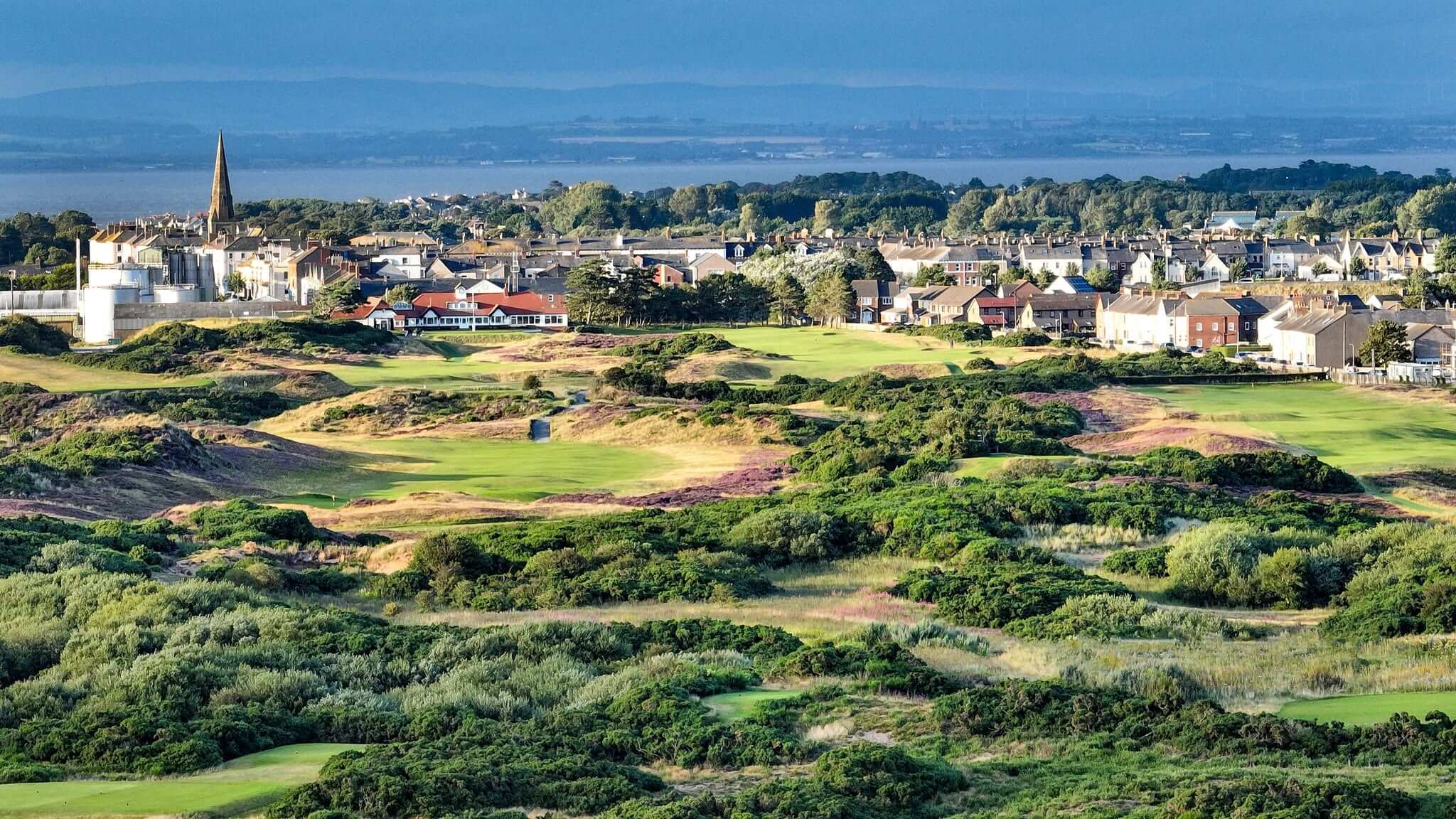



Silloth on Solway Golf Club
I had high expectations on the drive from Southport up to Silloth on Solway. Names like Alistair MacKenzie and Willie Park Jr. had a hand in the design and I had heard I was in for a treat. The scenic drive though the mountains of England’s northern Lake District did little to dispel my excitement. Of course, the battering rain dampened my spirits a bit, but this was a course I had circled so there was no turning back.
The clubhouse at Silloth is somehow both grand and also unassuming. It sits on a perch above the town and the adjacent port (really more of a dock) and beautifully frames the opening tee shot and closing approach. Meanwhile, the interior is far from grand (perhaps with the exception of the taxidermied moose in the front lobby), but rather oozes history, seemingly untouched since construction in 1908.
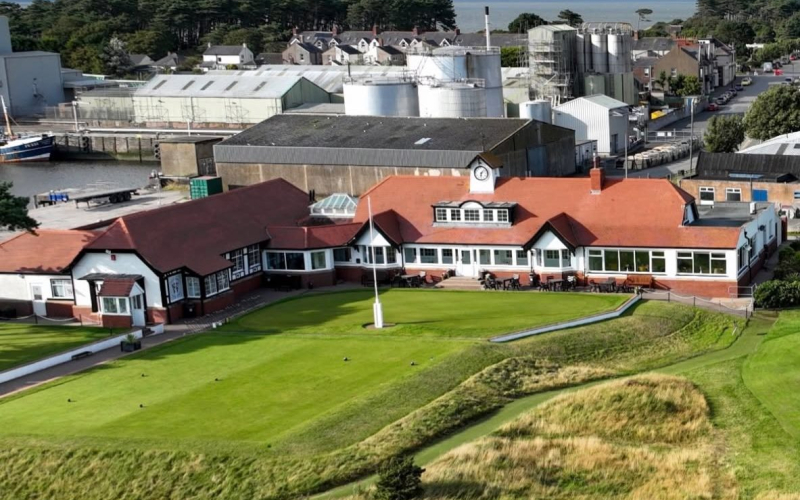
1st tee and clubhouse
Despite the awful weather when I arrived, which club secretary Alan called the worst of the year, I was determined to journey out across the historic links and boy am I glad I did. What I found was among the best golf courses I have seen anywhere.
The first three holes cut through the dunes towards the coast and set the tune for the round, jumpstarting several recurring themes. Out of the gate, the first approach is blind to a punchbowl green. Then your palms are sweating on the second tee as you play towards a bending sliver of fairway through the gorse-covered dunes. At the third things open up, but an errant approach short or left is rejected by severe runoffs. The middle of the front nine finally reaches the coast, from where views reach to the Isle of Man and beyond on clear days.
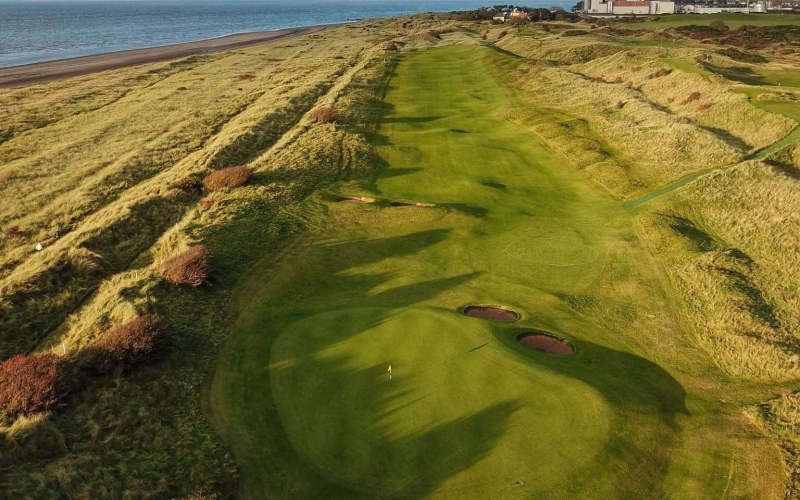
5th hole
My personal favorite stretch of the course began at the seventh, where an uphill approach is played blind to another punchbowl green. Then the short ninth presents the most memorable approach of the day towards the sea. It requires just a wedge on a calm day but is played to a tabletop, postage stamp green with runoffs towards seven intimidating pot bunkers. Finally, the tenth turns the routing back towards home where a boundary fence hovers tight on the right while gorse encroaches on the fairway and green from all other directions.
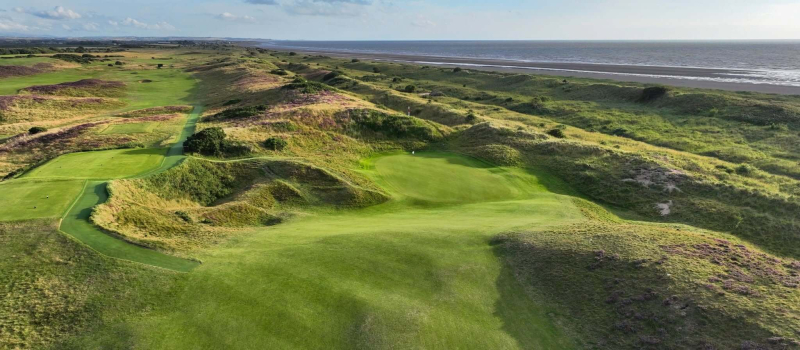
7th hole
The course felt like it had eighteen unique, signature holes but the thirteenth officially makes that claim and is the first of three par fives across the closing six holes. It generously offers space off of the tee before tightening up through a gully on the blind second shot with an infinity green that eagerly rejects any left miss.
For those considering a trip to Silloth (hopefully!), I’d be remiss if I didn’t caution that the course is extremely challenging. That was part of the allure for me but it may be helpful to know what to expect beforehand:
- The course features a lot of blind shots. Like, a lot! Perhaps the most I have ever seen on a golf course. To me it adds to the charm and reflects the historic nature of the routing, which was conceived in 1892. Blind shots are not all that rare on older world-class courses (think Royal County Down or Cruden Bay), although I suspect it would turn some off if unexpected.
- The course has bunkers that come into play on almost every shot and each looks exactly the same; small round pot bunkers that are tough to play from. Quite frankly, each seems to be in just the right spot to make you pause and think.
- Most of the tee shots and many approaches are threatened by unrelenting gorse that, I’d guess, has ruined many rounds. It is a test of strategy throughout.
- Finally, I was intrigued by the perilous-looking position of many pin locations. With steep run-offs and greenside bunkers abounding, each iron shot requires commitment and sound execution.
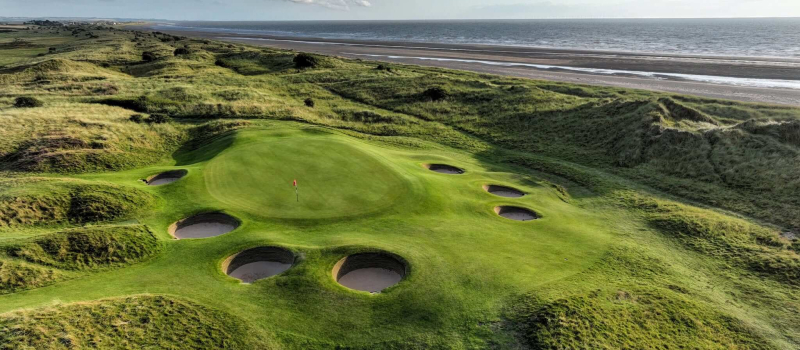
9th hole
Silloth is a challenge to get to but it is not impossible to incorporate into a well-crafted itinerary. It is just around 2.5 hours from either Troon (Scotland) or Southport (England). It can be tied into either of those world class regions fairly easily or even be a bridge to visit both. I can tell you it is well worth the journey. For me, one thing that makes a great course is great variety. Personally, I want eighteen unique holes that distinctly stand out from each other so I can remember them all. On my drive back through the spectacular scenery of the Lake District towards my next stop, I had a smile on my face and vividly reminisced about each hole as I planned my return trip.
Reach out and we can get started planning your golf trip to Silloth.